


01 Apr Capturing the Imperfect: How We Recreate Board-Formed Concrete in CG
In architectural visualization, the details matter—especially the ones that aren’t perfect. Real materials carry the story of their making: the grain of the wood that formed the concrete, the uneven patina of a hand-troweled wall, the subtle weathering from years of sun and rain.
At blackpine, one of our guiding principles is that realism doesn’t come from high poly counts or flashy lighting alone. It comes from material honesty—how surfaces respond to light, how they carry wear, and how they reflect the imperfect beauty of the real world.
Take board-formed concrete. Its character lies in its irregularities: the slight misalignments in the formwork, the knots and texture of the wood grain pressed into wet cement, the tiny air pockets and ridges that form as the mix cures. To recreate this, we don’t rely on off-the-shelf textures. Instead, we build our materials from the ground up—literally.
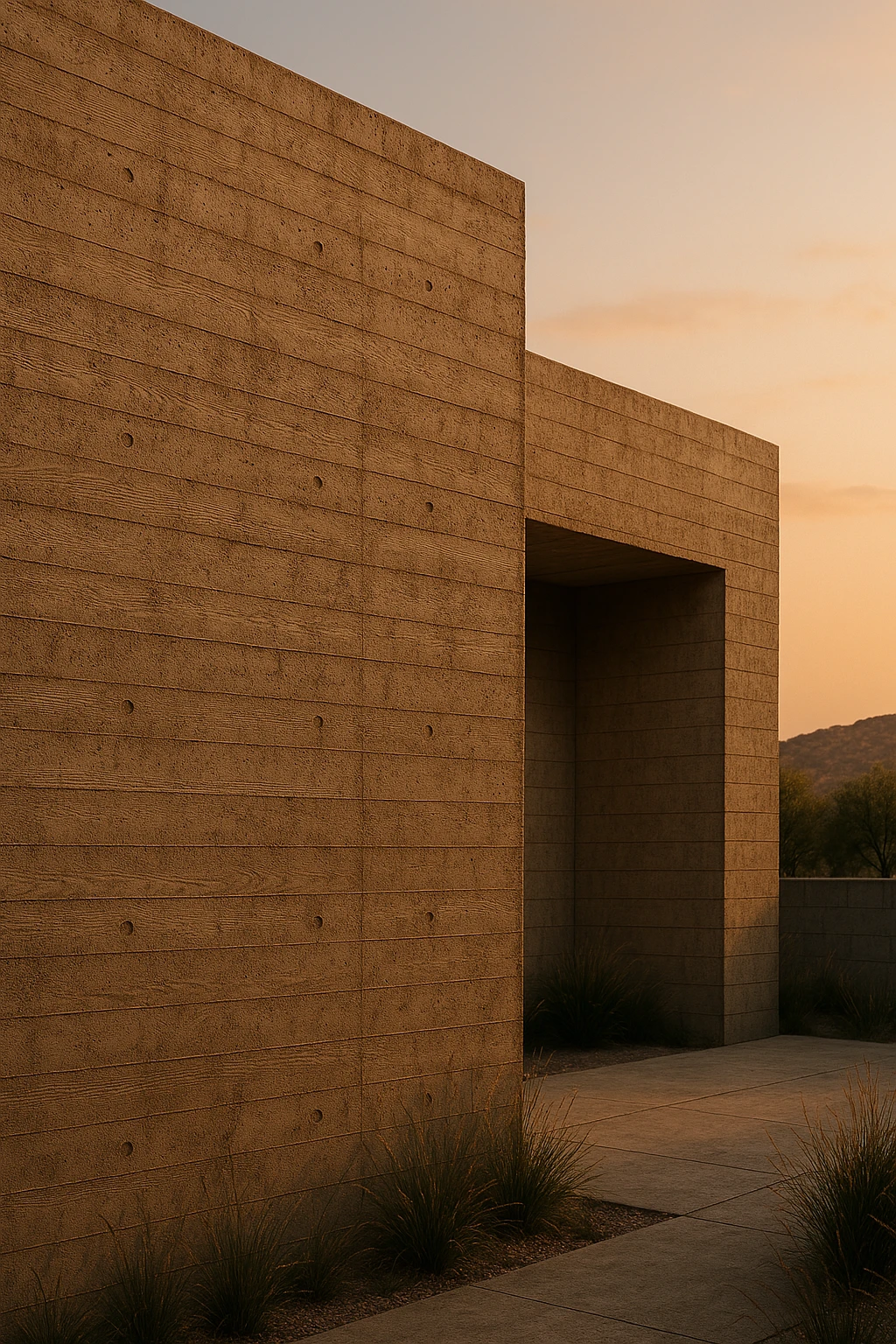
Render from “Desert House A” – Scottsdale, AZ
We start by crafting custom displacement and normal maps, often generated from real-world reference photography or scans. These maps carry the imprint of the wood’s texture, allowing us to push the concrete surface just enough to catch light in a natural, tactile way. Then we layer in custom roughness maps, adding variation that mimics how moisture, dust, and time affect the material’s sheen.
“Realism doesn’t come from high poly counts or flashy lighting alone. It comes from material honesty—”
Our shader system is built for flexibility. We use directional masks to control how light interacts with each panel of concrete, so surfaces feel grounded in their environment. When the sun hits at a low angle—like in golden hour exteriors—you get that soft grazing effect where every ridge and imperfection comes to life.
One of our favorite examples of this is in the Desert House A animation, where morning light slices across a brutalist courtyard wall. The result isn’t just a concrete surface—it’s a material that holds the memory of the forms that shaped it.
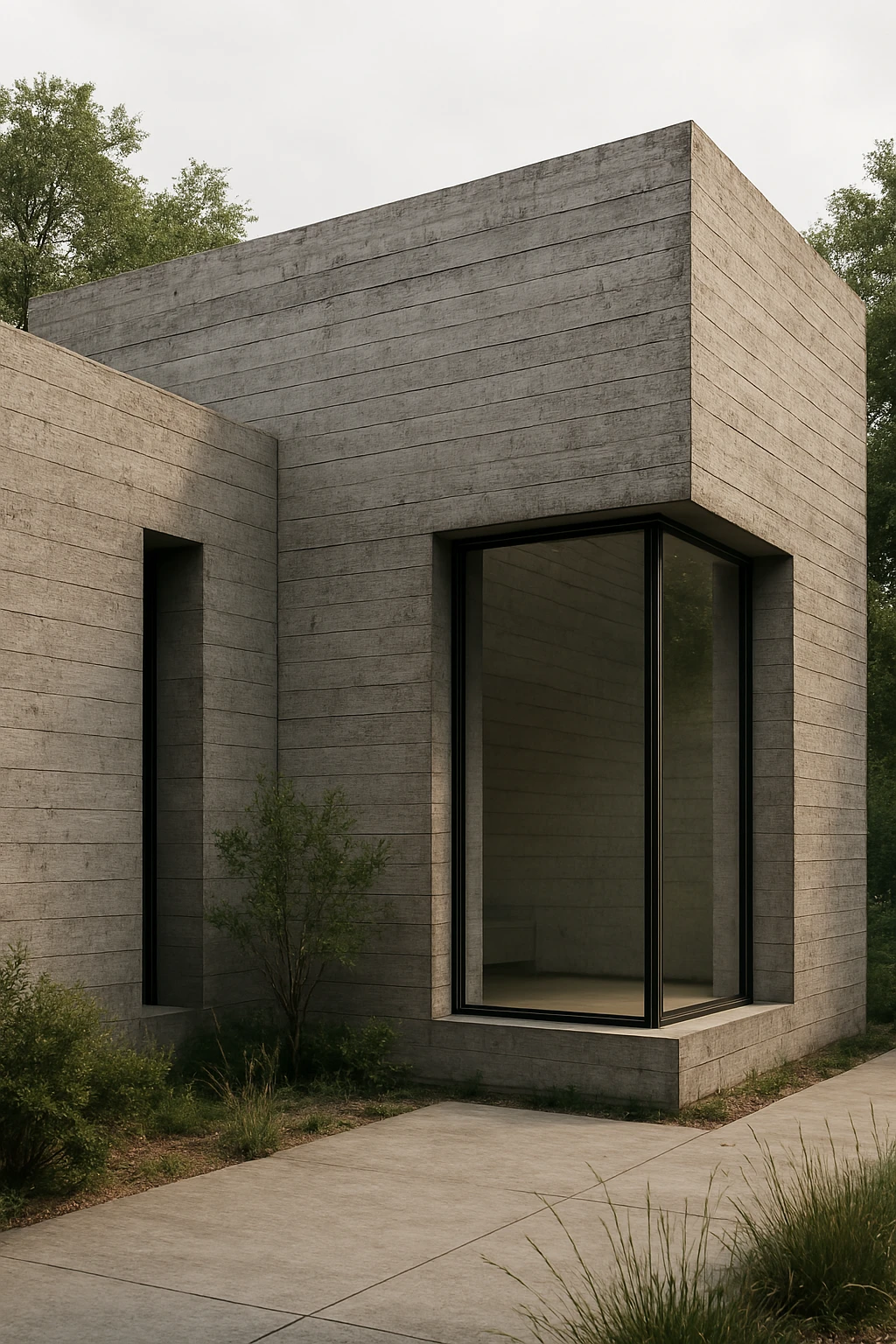
These subtle cues make all the difference when communicating material intent to clients, designers, or developers. They help anchor a design in the physical world, where texture, light, and shadow tell as much of the story as the structure itself.
Because in the end, we’re not just rendering spaces. We’re telling the story of how they’re made.

No Comments